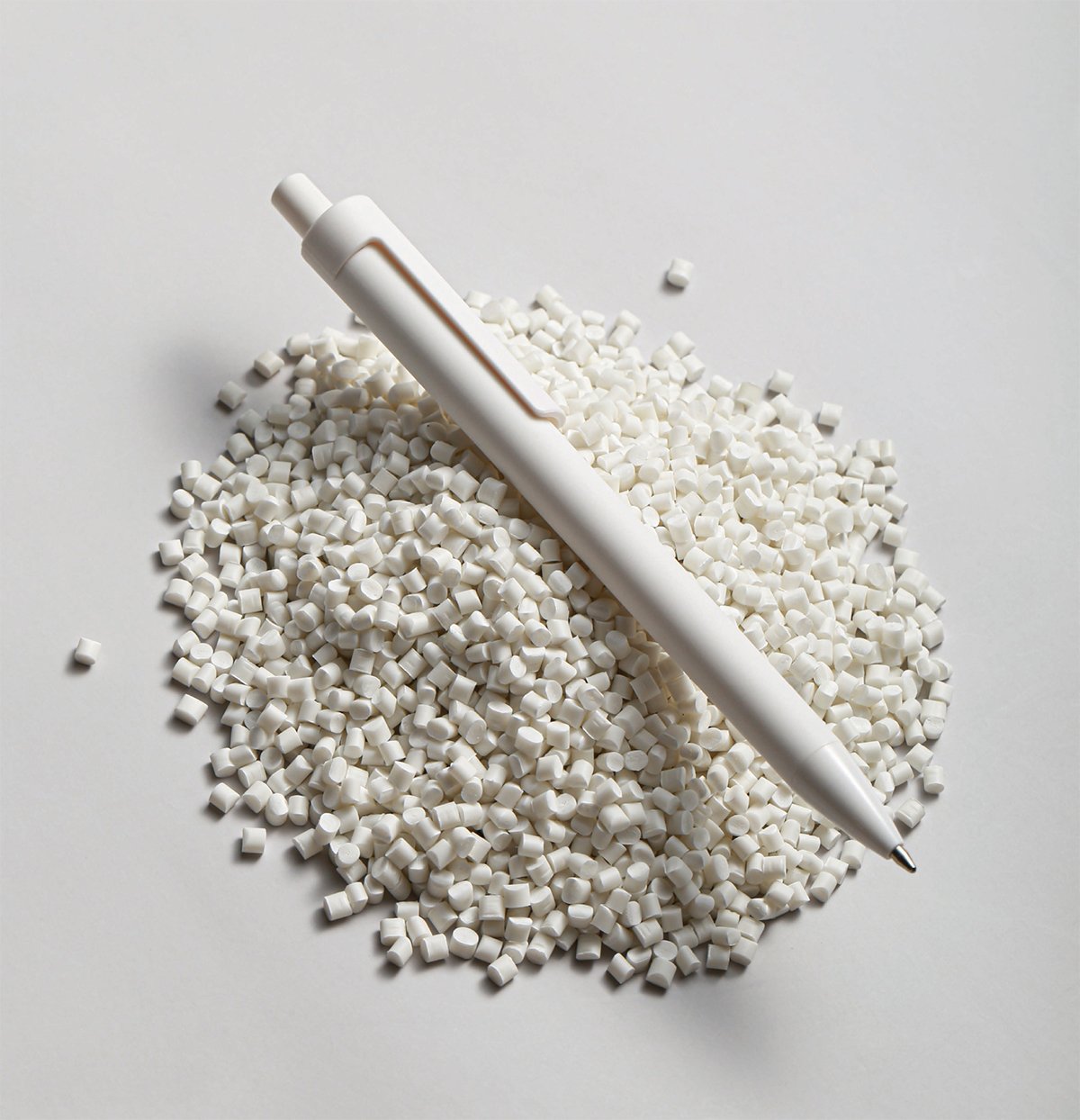
What is PLA
Polylactic Acid, most commonly known as PLA. It is derived from renewable resources include corn starch, tapioca roots, or sugarcane, a sharp contrast to petroleum-based plastics, which have a finite availability.

Pros:
It’s from renewable resources, and it ends up being breakdown within 90days through commercial composting.

When we applied the material to our pens, we were surprised found it enhanced the whole pen from visual and tactile levels. It looks more expensive compared to ABS-made pens.

Cons:
PLA pens require industrial composting conditions, meaning consumers or businesses must have access to a commercial compost facility, which is not available everywhere.
If they end up in our oceans or rivers, it could take years to degrade, posing a threat to marine and birdlife.

Why aren’t our pens isn’t 100% PLA
It’s about PLA character. PLA pen has a lower melting temperature and behaves in a brittle way. Only with the adding of degradable PBAT extracted from petroleum and binder that’s less than 5%, the toughness and resistance to elevated temperatures have been enhanced, so PLA pen can act the same as traditional plastic pens.

发表回复